Cross-border payments for businesses that can't get dollars
In many African markets, businesses are ready to trade but can't get the dollars to pay their suppliers. Cedar moves that money. I led design strategy from the first idea to a working product, and the brand and marketing system around it.
- The problem
- Businesses in markets with dollar shortages couldn't pay foreign suppliers, and didn't trust an app to do it.
- My role
- Design strategy lead from first idea to launch: product flows, the brand, and the campaign system.
- Team
- Me, 1 product designer, the founders and a small engineering team.
- Outcome
- A launched product, and a brand and growth system that opened new segments such as law firms.
Nobody sends money to a stranger they can't see
The brief was a payments app. Plenty of those exist. What doesn't exist in these markets is the trust to use one: a business owner sending a supplier's invoice through an app they've never heard of, in a currency they can't easily buy.
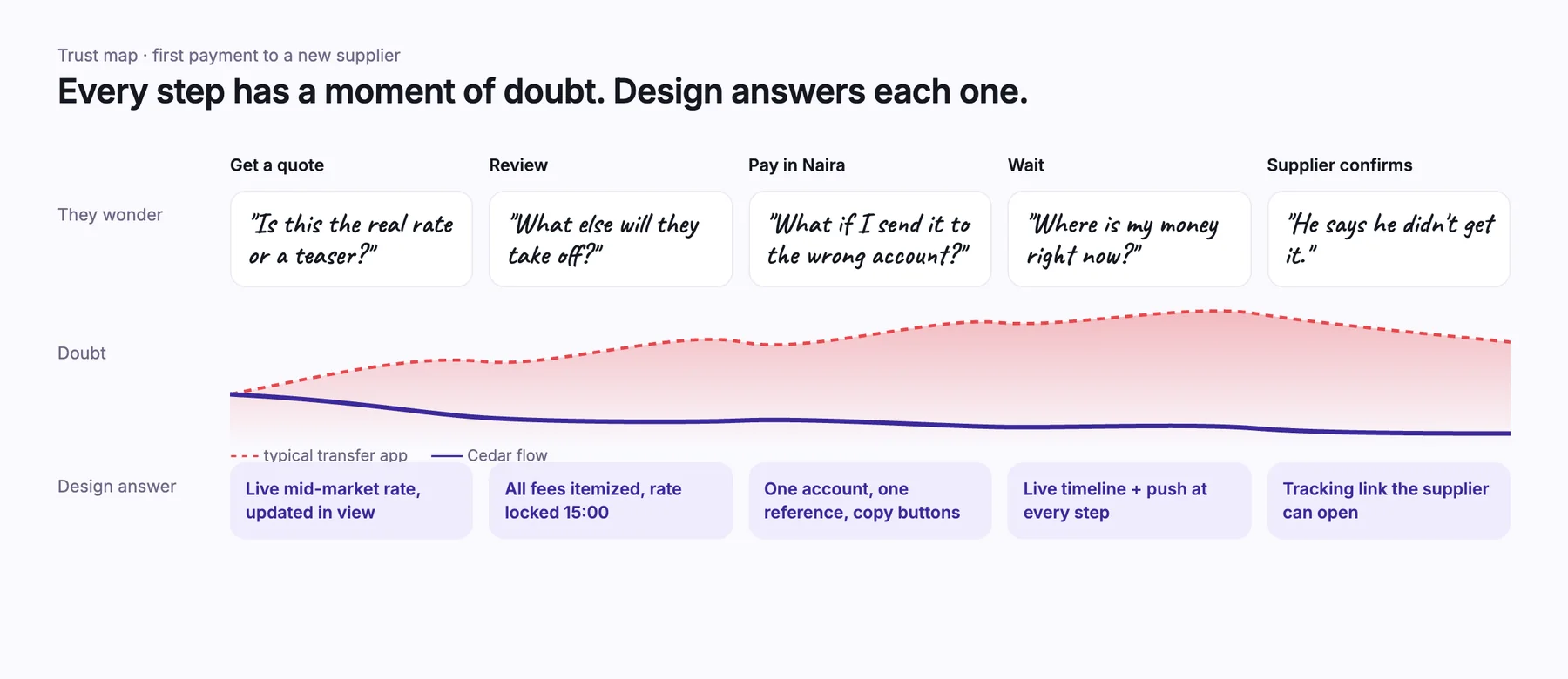
So the work wasn't moving money. It was answering three questions on every screen, before asking for anything:
- How much will this cost me, all in?
- Where is my money right now?
- How will my supplier know it's coming?
No trust, no trade. Every design decision came back to that line.
The calls I made
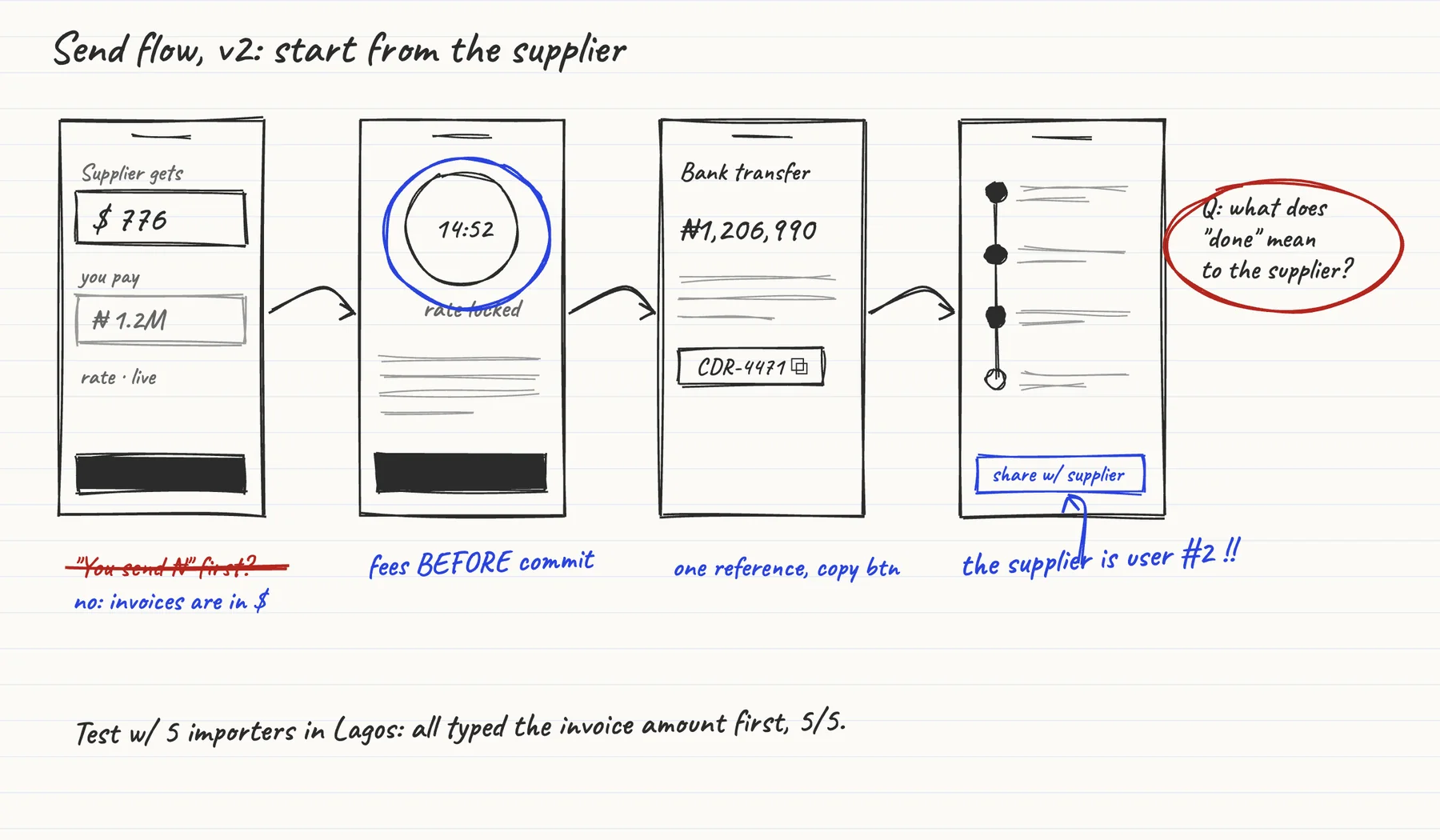
Which number does the user type?
The supplier's invoice is in dollars. Asking for Naira makes the business do currency math on a moving rate, which is exactly the stress we were there to remove.
What it cost: the Naira total moves with the market, so the review screen had to show it live and lock it.
Floating rate or locked rate?
A business can't tell a supplier "about $776". A locked rate turns a guess into a promise, and the countdown makes the promise honest.
What it cost: Cedar carries the currency risk for the window, so we kept the window short and made it visible.
Who is the receipt for?
The sender's real anxiety is the supplier's call: "Did you pay?" Giving the supplier the same live view ends that call.
What it cost: a public, unauthenticated page, designed to show progress without exposing account details.
Send. Receive. Done.
The core flow is four steps. Each one removes a reason to hesitate.
One brand, many audiences
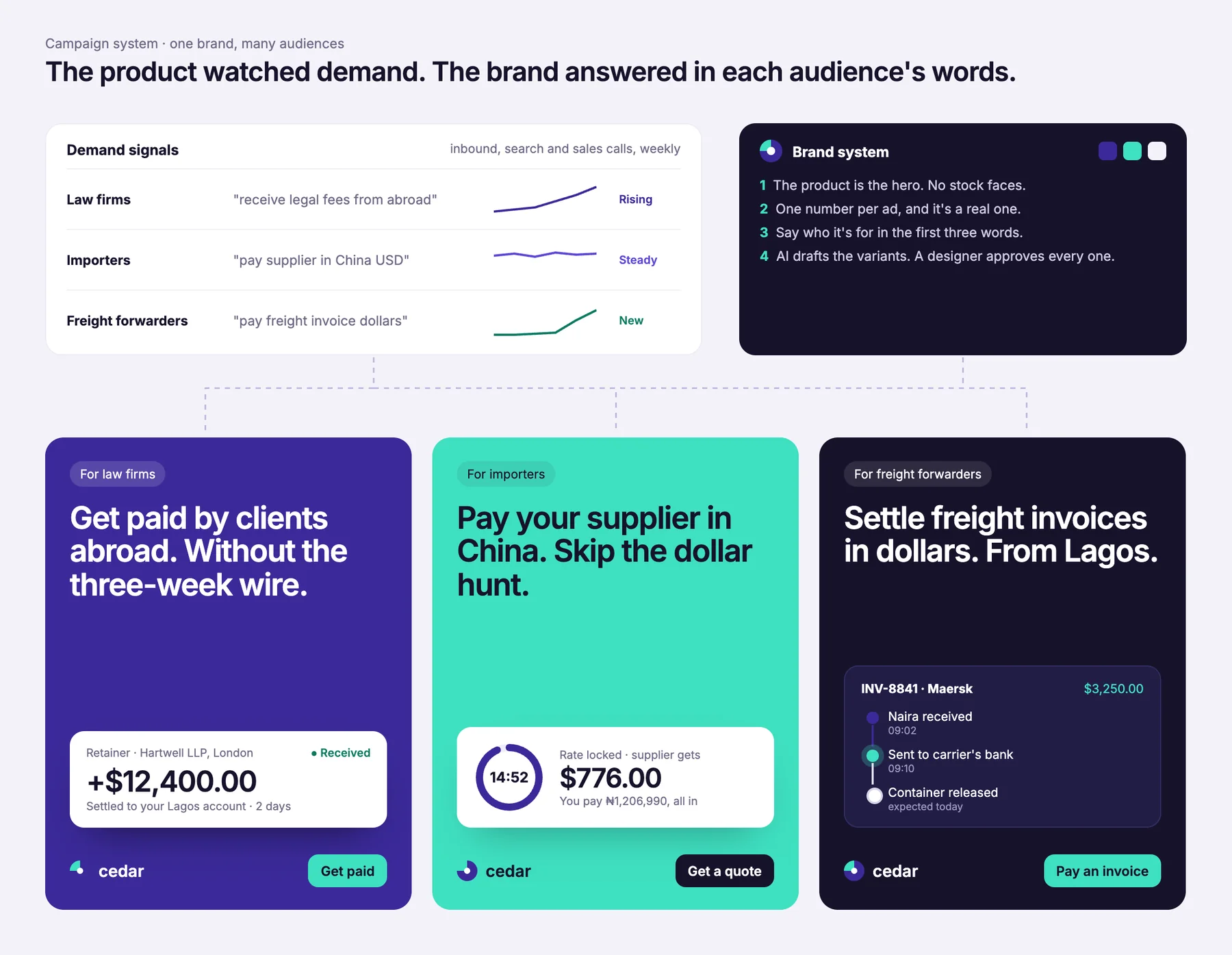
Trust also decided how Cedar found customers. I set up a campaign system with two sides. The product watched demand signals from inbound leads, search and sales calls. The brand system turned each new segment into ads that named the audience and showed the product doing their job.
AI drafted the variants. A designer approved every one. When law firms receiving fees from abroad showed up as a segment, they got their own ads within days, built from the same parts as everything else.
What I'd do differently
I'd design for the supplier from day one instead of discovering them halfway through. They were the second half of every transaction, and the best trust signals we built were the ones they could see.